By SUE SUCHYTA
Sunday Times Newspapers
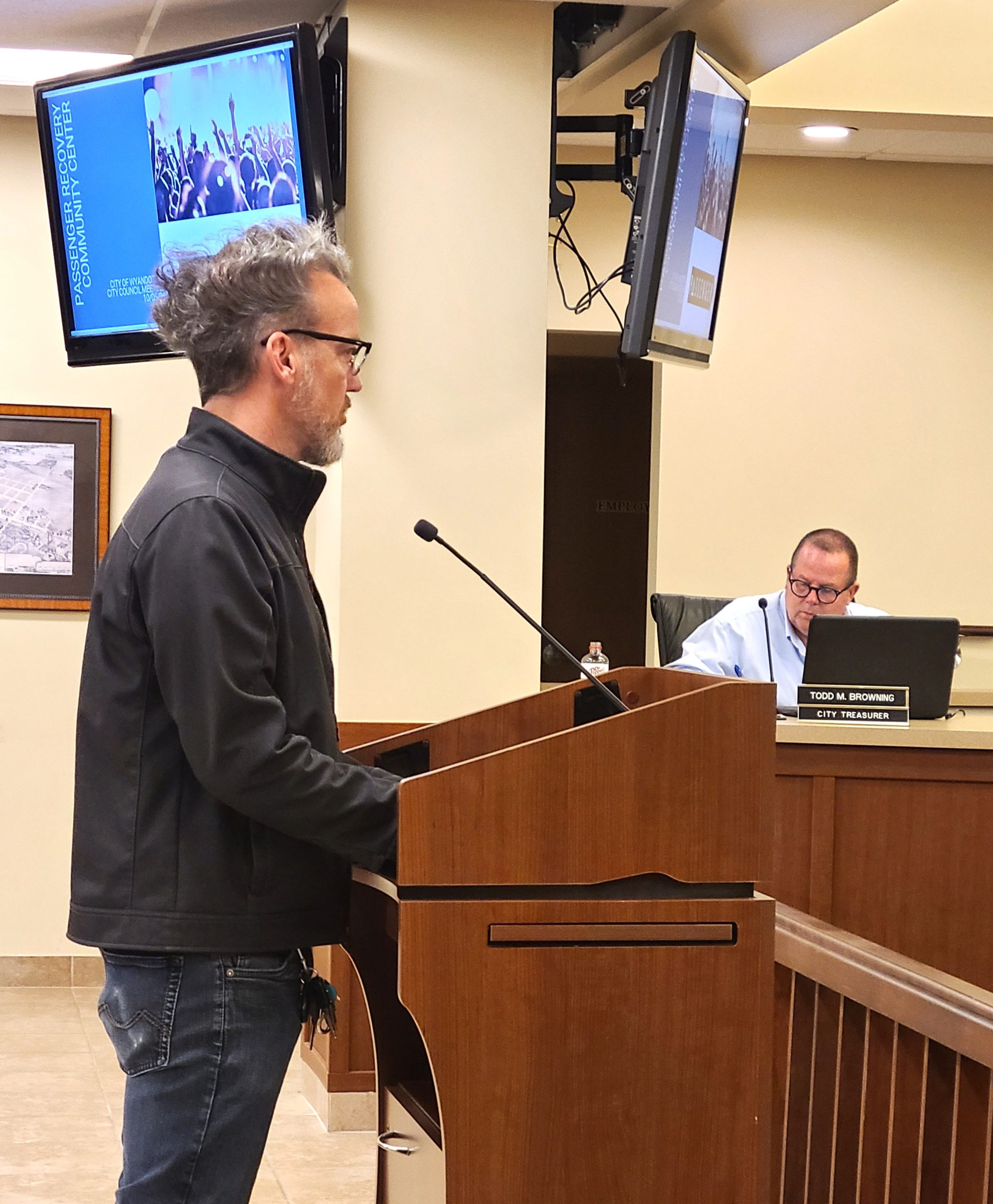
WYANDOTTE – A peer-led, non-clinical Passenger Recovery Community Center has opened at 1004 Oak Street, Executive Director Chris Tait said at the Oct. 5 city council meeting.
The group was founded and is based in Hamtramck and Detroit.
The Wyandotte center is open Wednesday through Saturday from noon to 8 p.m., and Sunday from 1 to 8 p.m.
Tait said community organizations significantly helps improve addiction recovery by reducing relapse rates, combating social isolation, and boosting “recovery capital.”
Recovery capital refers to social, physical and human resources that improve quality of life, boost self-esteem and decrease psychological distress.
Peer-driven support and coaching, along with mentorship and recovery meetings, let people share experiences to overcome obstacles.
Holistic and practical support includes assistance with housing, employment, education and life-skill building.
Recovery centers serve as welcoming spaces that foster belonging while reducing shame and isolation.
Tait said that Passenger Recovery Community Centers help reduce health care costs by helping individuals maintain long-term recovery, which results in fewer hospital visits, emergency care needs and overdose-related expenses.
He said it also reduces criminal justice spending by reducing recidivism, which leads to fewer incarcerations, lower court costs and a decreased law enforcement burden.
Tait said money spent on recovery support saves money needed for crisis services, treatment programs and law enforcement costs.
He said peer support services use evidence-based practices and utilizes those who have experience substance use disorder, SUD, and by providing community and social connection to complement clinical services and sober living support, it promotes self-advocacy.
Tait said translation services are provided as needed, as well as connection to food assistance.
Support groups include Creatives in Recovery, Alcoholics Anonymous, Narcotics Anonymous, LGBTQ+ Recovery Support, Recovery Dharma (a non-theistic program that uses Buddhist practices), SMART Recovery, (a Self-Management and Recovery Training that uses Cognitive Behavioral Therapy), and Sex and Love Addicts Anonymous.
He said harm reduction resources include access to Narcan/Naloxone, and Fentanyl test strips.
Tait said Keyboard Catharsis, a creative writing group with Jimmy Doom, meets at 1 p.m. the last Sunday of every month at 1004 Oak Street in Wyandotte.
He said the Passenger Recovery Community Center in Wyandotte was made possible by the Michigan Department of Health and Human Services.
Tait said in addition to support groups, Passenger Recovery provides music and the arts for inspiration, connection and positive change, as well as monthly arts, music and community activities, recovery education and harm-reduction awareness.
In published literature, Passenger Recovery, which is based in Hamtramck and Detroit, said in 2025 it supported more than 3,200 participants through recovery meetings and events.
It collaborates with more than 30 recovery and mental health organizations in the metro Detroit area, and participated in more than 40 community outreach events.
They provide Recovery Friendly Workplace Training for local businesses as part of the Recovery Friendly Workplace Initiative in partnership with the Michigan Public Health Institute.
It also offers crisis de-escalation and harm reduction training for both participants and community members.
Free music therapy is also offered to underserved participants experiencing substance use disorder and housing deficiencies.
They also host more than 100 recovery-focused activities supporting community wellness and engagement.
For more information, go to passengerrecovery.com.