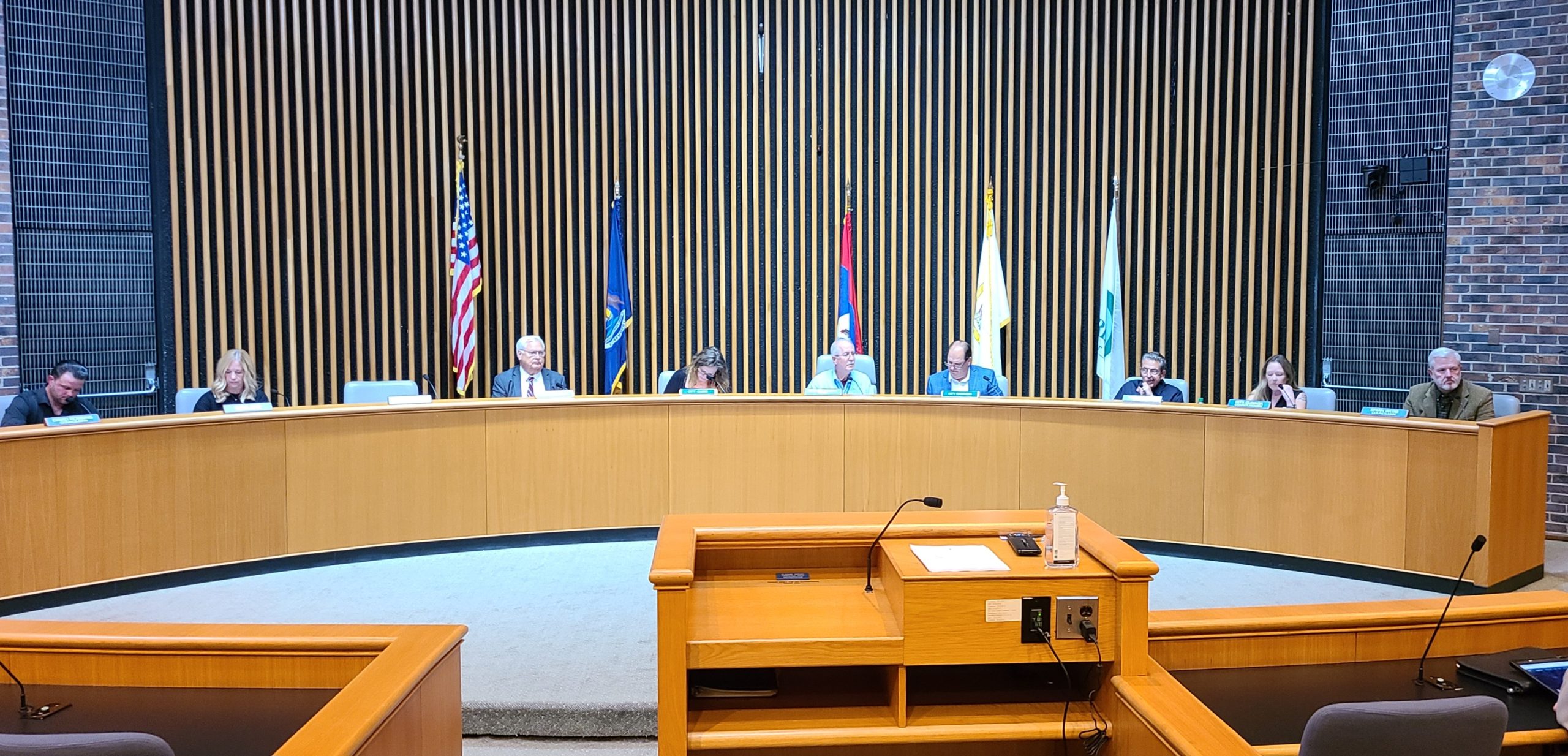
The Riverview City Council amended its code of ordinances to require commercial building to be inspected upon transfer of ownership during the Oct. 7 council meeting.
By SUE SUCHYTA
Sunday Times Newspapers
RIVERVIEW – Commercial buildings in the city will now be required to be inspected upon transfer of ownership, just like residential homes, following an Oct. 7 ordinance change by the City Council.
The purpose of the ordinance is to protect the health, safety and welfare of residents by preventing blight, avoiding the creation and maintenance of public nuisances, and to help ensure that minimum property maintenance standards are upheld for all structures.
The structures would include commercial and apartment buildings.
Commercial buildings include office, retail, service and industrial buildings, as well as multi-family (more than two unit) dwellings.
Accessory buildings, which include garages and sheds, would be included in the inspection.
Transfer refers to the sale or conveyance of the title to another for consideration, and does not apply to the transfer of property through inheritance where no bona fide sale is intended and those receiving the inheritance occupy the business property.
The Building Department director and their designees will make the inspections and determine the condition of the buildings. The building owners, in turn, will give the inspectors unincumbered access to all areas of the building.
An inspection must occur before any sale or transfer of a commercial building is finalized and a certificate of occupancy issued.
The inspection and C.O. must occur within six months of the sale or transfer.
If a commercial property is sold without a C.O., the purchaser must agree to correct all violations within six months of the date on the preoccupancy agreement. Funds must be held in escrow to ensure that all violations are corrected.
Non-owner-occupied residential properties with three or more units will be inspected annually.
The inspections by the city are limited to visual inspections and do not guarantee or approve of any latent, structural or mechanical defects in the building.
Purchasers should not rely on the city’s inspection for a full representation of the commercial building’s fitness.
The city’s inspections exist to assess the condition of the city’s commercial buildings, their compliance to code, and to encourage owners to improve their properties.