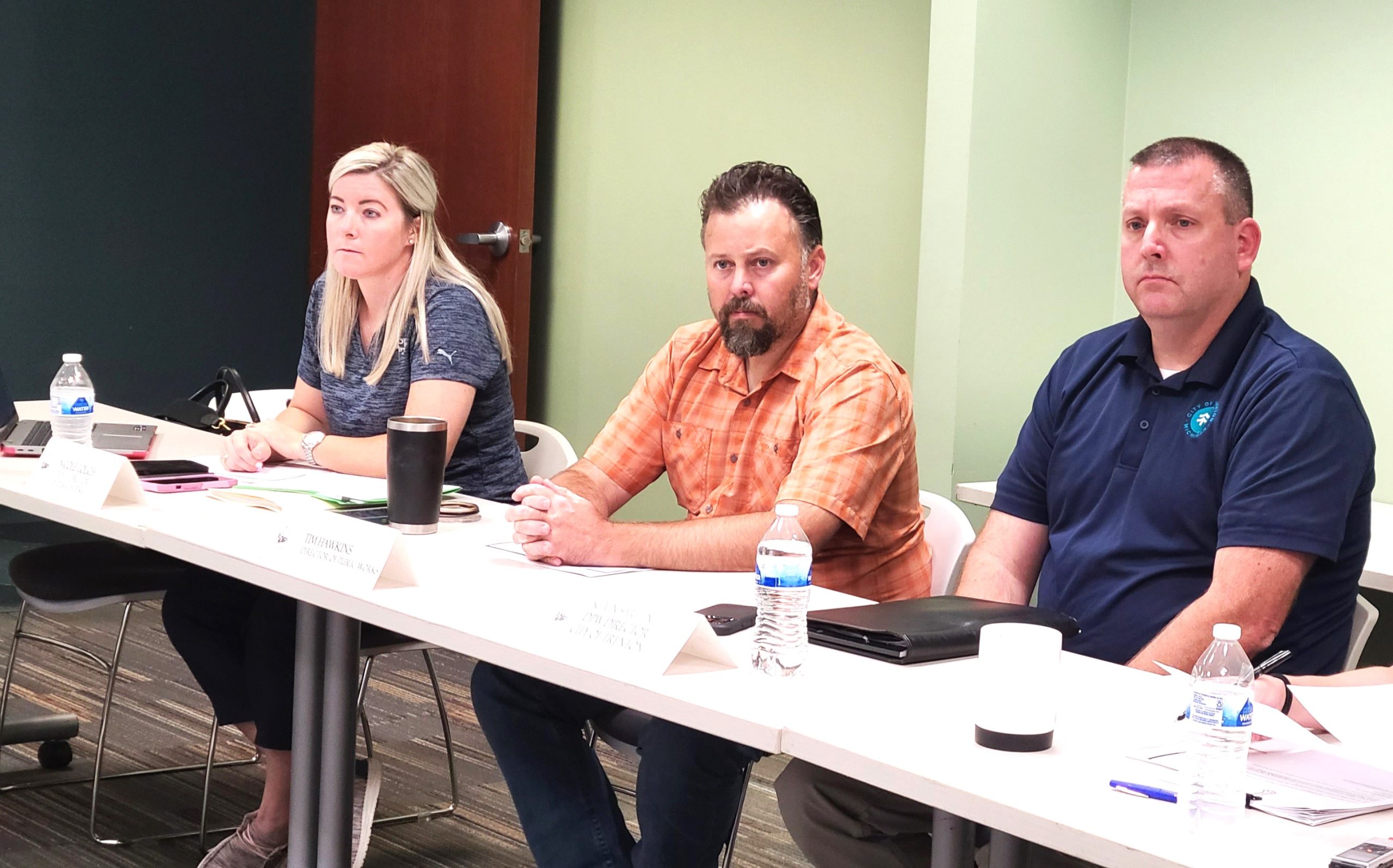
Dearborn Public Works Deputy Director Nicole Golich (left) and Director Tim Hawkins, with Trenton DPW Director Kevin Sargent, who works in a city that handles its waste pickup with city employees, attend an Aug. 28 Dearborn City Council study session on waste removal options.
By SUE SUCHYTA
Times-Herald Newspapers
DEARBORN – Amid resident dissatisfaction with Priority Waste’s takeover from Green for Life, the City Council held a study session to discuss future waste removal options, including bringing the work in-house.
Mayor Abdullah Hammoud said the waste pickup delays by Priority Waste had been exacerbated by the fewer than the 17 trucks required to service routes being available, with 15 trucks reportedly operating in the city by mid-August.
He said he learned that the delay in having enough trucks was caused by the need to repair and outfit the vehicles acquired from GFL.
Trenton Public Works Director Kevin Sargent, who was invited to attend the study session, shared how his Downriver community has performed waste removal with city employees, a situation that is aided by the city’s proximity to the Riverview landfill.
He said Trenton has a transfer station, a site to offload trash from smaller trucks to larger ones prior to transfer to a landfill, but Trenton does not currently use it.
Sargent said that they have nine employees and one supervisor dedicated to waste removal. The city has two residential trash trucks and one compost truck.
He said offering city waste removal employees the opportunity to move up to other DPW jobs provides them with an incentive to stay with the city, which lessens attrition on what is a demanding, physical job.
Dearborn Public Works Director Tim Hawkins and Deputy Director Nicole Golich presented the challenges of bringing waste collection for trash, recycling and yard waste in-house, which would include the need to purchase trucks, hire employees and establish a transfer station, so waste removal trucks would not have to spend one hour driving round-trip to a landfill each time a truck reaches capacity.
Transfer stations allow larger vehicles to be filled with waste, which are then taken to a landfill, recycling or composting facility.
Transfer stations come with a set of problems, which include an unpleasant smell and the need to find a place to establish one which will not anger residents.
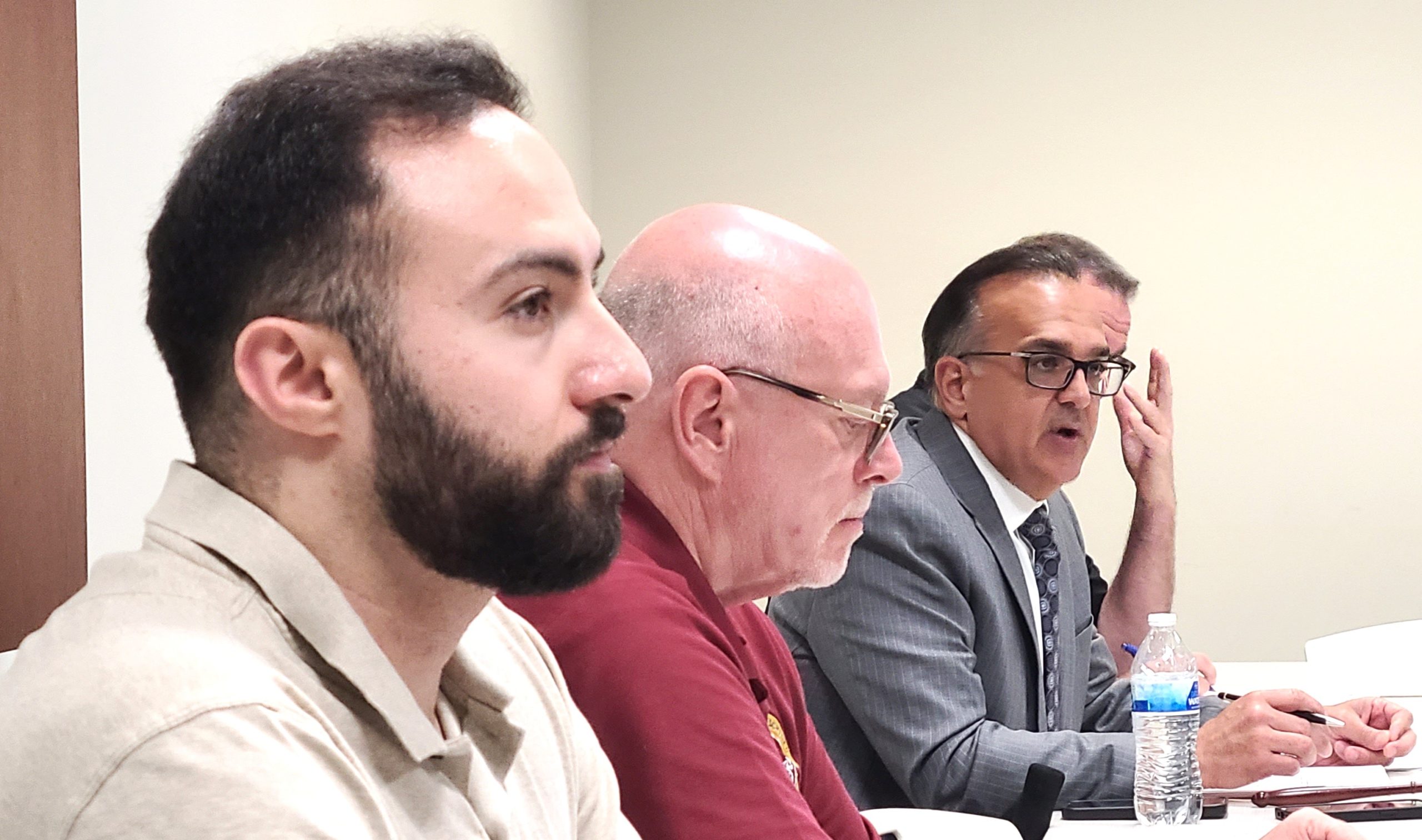
Dearborn City Council President Michael Sareini (right) asks questions during an Aug. 28 study session on waste removal options, as Councilmembers Mustapha Hammoud (left) and Ken Paris listen.
Bringing waste removal in-house would increase the cost to residents. The current contracted four-year total cost through fiscal year 2028 with Priority Waste is $21.68 million, while the estimated total cost to bring waste collection in-house would be $36.2 million.
Currently the city levies 2.11 mills for waste collection. It is estimated that almost an additional mill would be needed to bring the service in-house, which would increase resident cost by about 63 percent.
The city would need 21 waste removal trucks to service the city since, contractually, city employees could not work the same extended hours that Priority Waste employees do.
It is estimated that the city would need 16 operating employees, five lead technicians, four public works technicians, four mechanics and one DPW supervisor, for a total of 30 employees.
Annual disposal cost estimates are $33.50 a ton for trash, $50 a ton for recycling, and $66 a ton for compostable yard waste. The annual cost of waste disposal would exceed $2.2 million.
GFL owns its own landfills, an advantage Priority Waste does not mirror, a cost which could be reflected in future contracts.
The cost of diesel fuel, at $3 per gallon, for 21 trucks year-round is more than $1.1 million annually.
Rear-loading garbage trucks cost $325,000 to $350,000, while the cost of side-loading trucks is about $380,000, with an estimated 7-year life if properly maintained.
Other challenges to bringing waste removal in-house include the availability of employees with commercial driver’s licenses, and the availability of mechanics to maintain the trucks.
Injury rates among trash collection employees are high, and the city would also have to insure each of the trash collection trucks in operation.
The city would also need a secure place to park the trucks and establish a fueling station.
The city would need swing employees to cover for employees who are ill or on vacation, and would need to offer job incentives that would allow it to retain employees. Call center employees dedicated to waste removal issues also would be needed.
Hammoud said the city had established a favorable contract rate with GFL, but anticipates that when the contract expires, the cost of waste removal with Priority Waste will likely increase 30 to 40 percent.