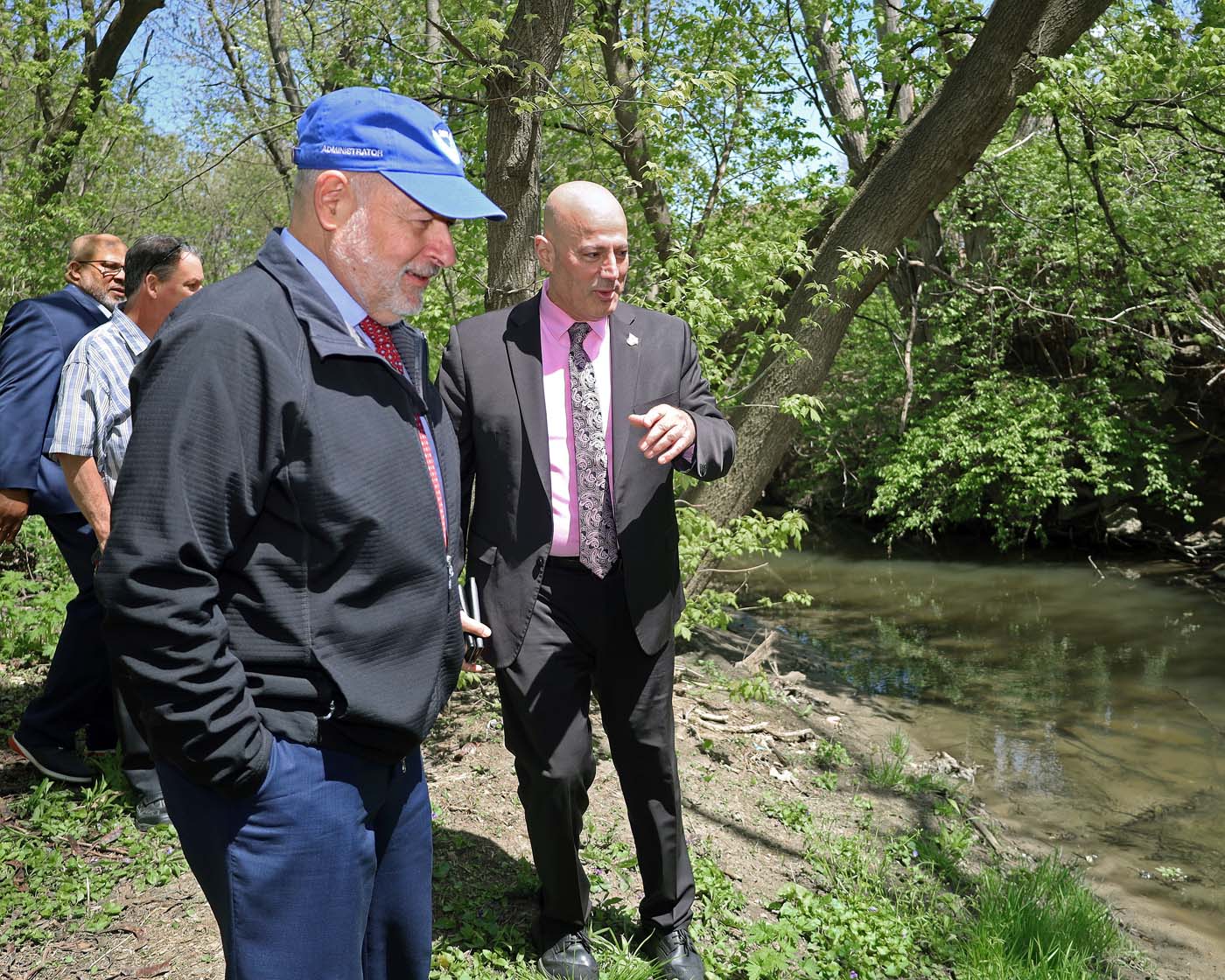
NOAA Administrator Rick Spinrad (left) and Dearborn Heights Mayor Bill Bazzi examine the Ecorse Creek shoreline in Dearborn Heights during their April 25 meeting.
HEIGHTS – National Oceanic and Atmospheric Administration Administrator Rick Spinrad visited Michigan last week to meet with mayors and officials representing communities along the Ecorse Creek for a first-hand look at the infrastructure flood solutions underway.
Mayors attending were Dearborn Heights Mayor Bill Bazzi, Lincoln Park Mayor Michael Higgins, Allen Park Mayor Gail McLeod, Taylor Mayor Tim Woolley and Ecorse Mayor Lamar Tidwell. The group initially met at the Southgate office of the Downriver Community Conference, then proceeded to Dearborn Heights for a first-hand look at the area in and around Ecorse Creek.
Also attending were representatives of the Illinois-based Great Lakes and St. Lawrence Cities Initiative who confirmed the organization has received $1 million in funding through the Federal Infrastructure Investment and Jobs Act (through the National Coastal Resilience Fund) to help support six Great Lakes-area environmental projects in 2024-25 – with one of the six being to help restore the North Branch of Ecorse Creek.
The funding will be used to manage and mitigate flooding, safeguard community assets and improve water quality. The desired outcomes of the project include creating a safe and accessible recreation destination and environmental asset while contributing to overall improvements in Detroit River water quality and the resilience of the Great Lakes.
The funding comes in addition to some $12 million in funding already earmarked through other resources to help improve the creek area, with another $1.7 million for the design (currently underway) of a detention basin by the U.S. Army Corps of Engineers at the former Inkster Road incinerator site. First steps of the clean-up and restoration work in and around the creek is expected to begin this summer.
“The North Branch of Ecorse Creek has experienced flooding for years, which has caused devastating impacts on residents and business owners,” Bazzi said. “We are proud and grateful to partner once again with the Great Lakes and St. Lawrence Cities Initiative to help restore the North Branch of Ecorse Creek and give back a sense of safety and security to surrounding communities.”
Bazzi serves as a member of the organization’s board of directors.
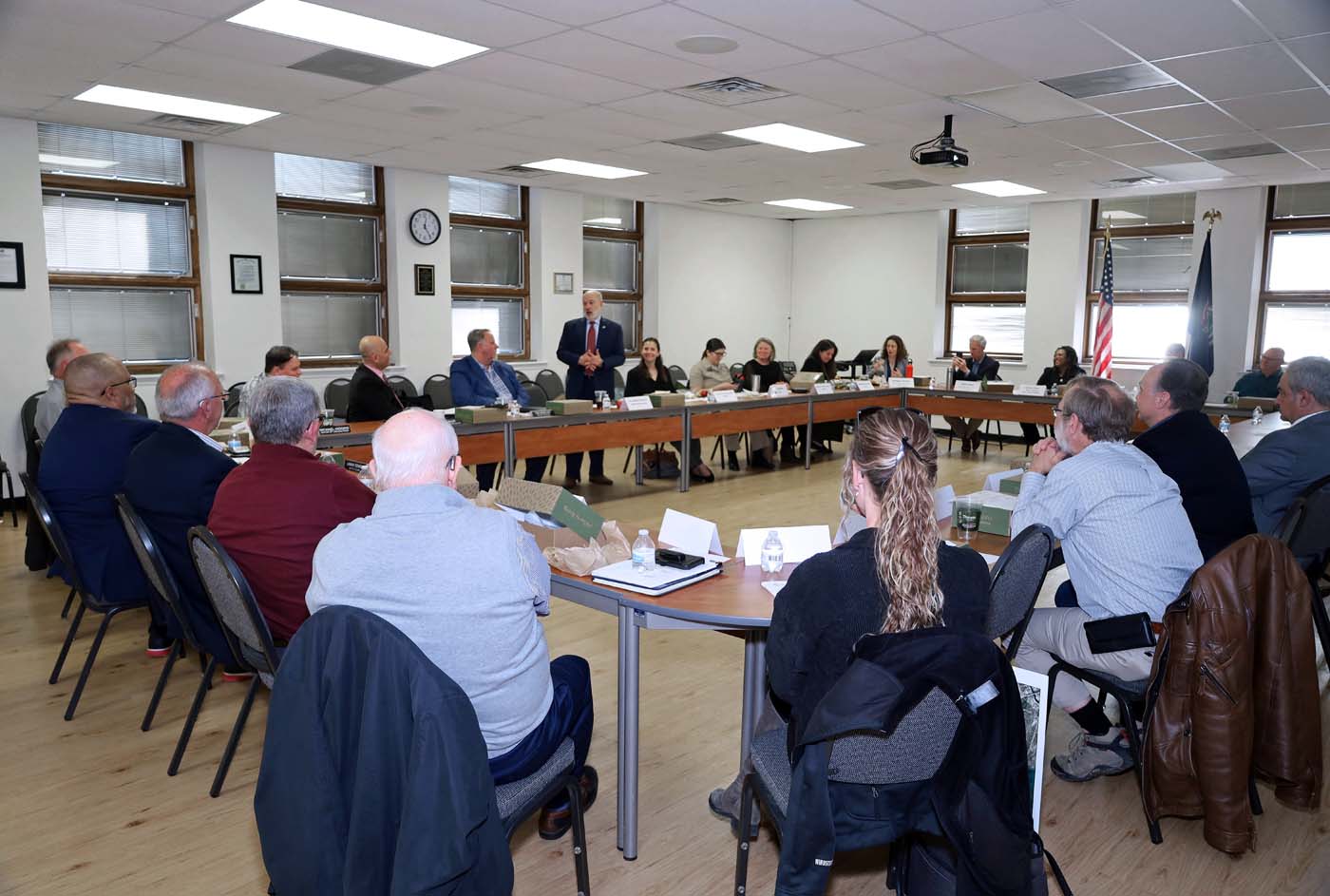
National Oceanic and Atmospheric Administration Administrator Rick Spinrad (standing) addresses local mayors and officials during his April 25 visit to southeast Michigan. The meeting was held at Southgate’s Downriver Community Conference facility, followed by an “in-person” review of Ecorse Creek in Dearborn Heights.
According to the Cities Initiative, The Army Corps of Engineers has documented flood risk to transportation assets and housing in the watershed at approximately $22 million annually, in 2017 dollars.
“President Biden’s Investing in America Agenda, fueled by funds from the Bipartisan Infrastructure Law, is all about getting results for people and the communities where they live and work,” Spinrad said during his visit. “When completed, this project will help reduce flood risk for up to 200,000 people, enhance fish and wildlife habitat, improve streambank stability, and increase public access and recreational opportunities. It’s a great example of how strategic investments in resilience can help impact a community’s bottom line.”
Through its Resilient Coastal Projects Initiative, the Cities Initiative has supported over 70 cities across the Great Lakes, securing nearly $3 million to date for the design and construction of coastal resilience projects. Partners for the North Branch of Ecorse Creek project, in addition to the Cities Initiative, include the Downriver Community Conference, seven municipalities along the North Branch of Ecorse Creek, Wayne County, Friends of the Detroit River, and Stantec Consulting Services.
About the Great Lakes and St. Lawrence Cities Initiative
The “Cities Initiative” is a multinational coalition of over 260 local governments led by mayors and chief elected officers working collaboratively to safeguard the economic, environmental, and social health of communities in the Great Lakes and St. Lawrence River Basin. It is committed to stewarding the basin’s freshwater and ensuring that all residents have access to clean, safe, and affordable water as the foundation for sustainable, vibrant, inclusive and resilient communities.